Butt Fusion Data Logging: Which Parameters Should Every Welding Report Record?
- Share
- publisher
- Riyang
- Issue Time
- Aug 24,2026
Summary
A practical guide to butt fusion data logging: which parameters every HDPE welding report should record, how loggers compare recorded values against the target procedure, and how to build a complete, auditable joint register for project handover and long-term traceability.

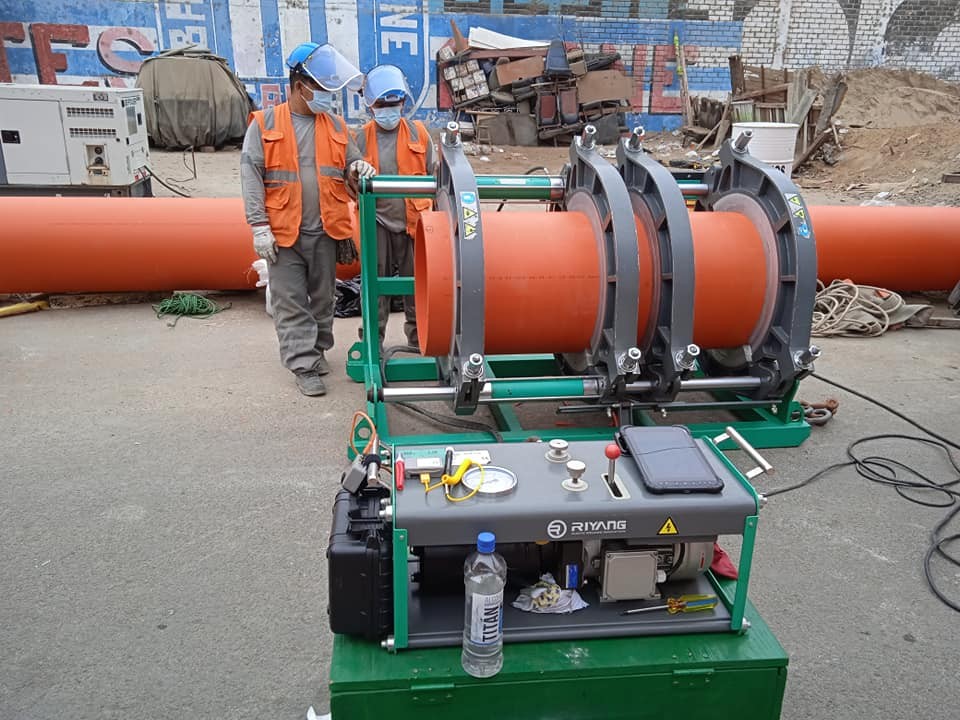
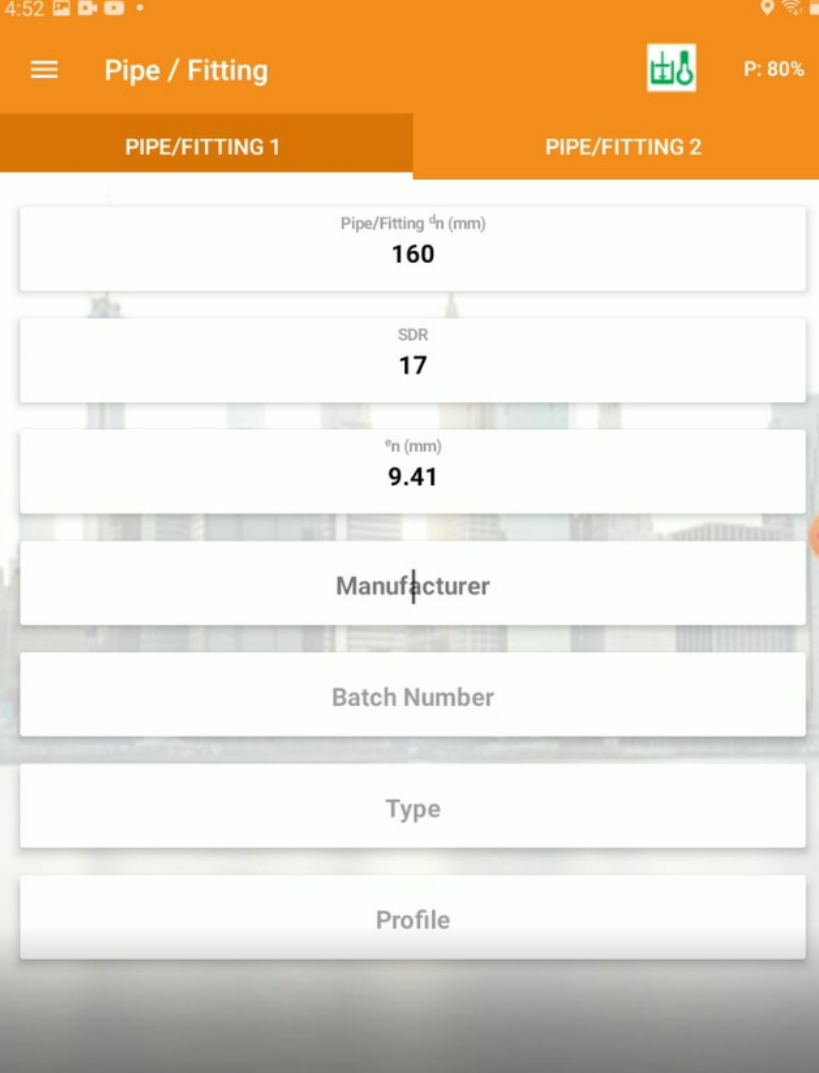
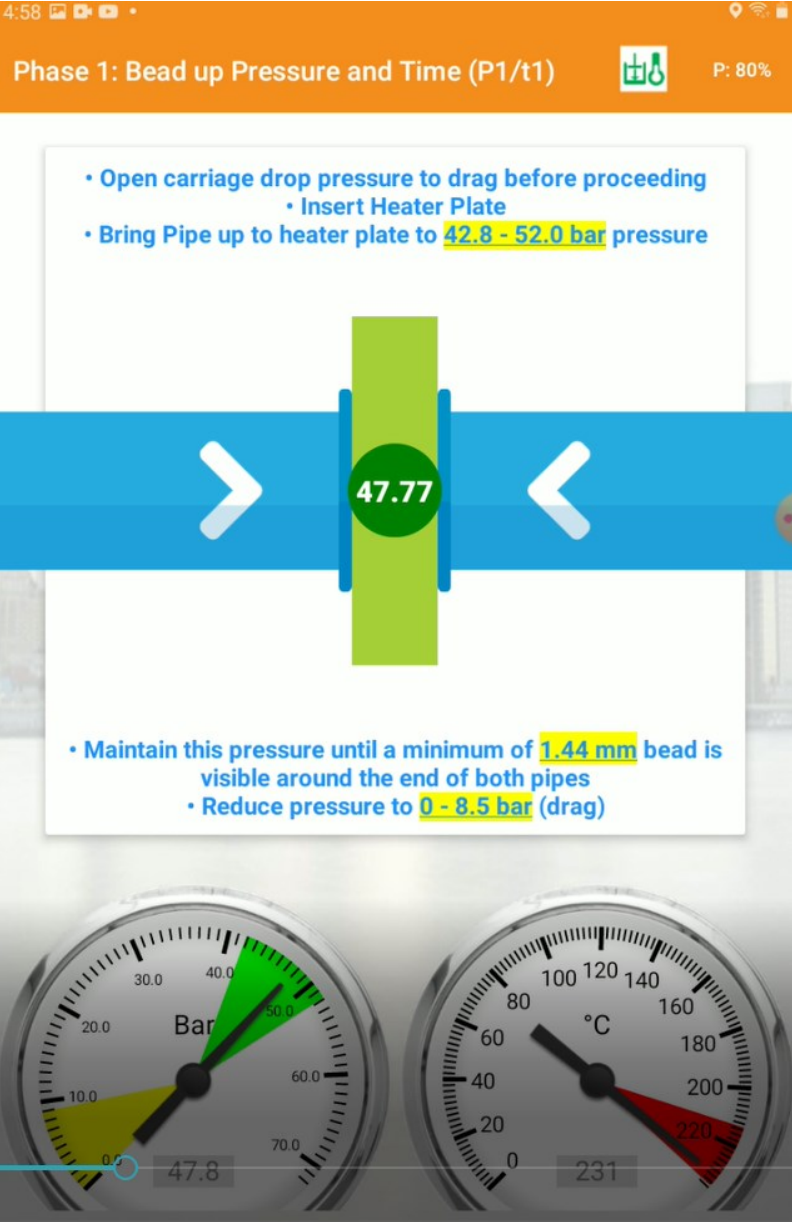
A butt fusion data logger records the measurable conditions of each heated-tool weld — heater temperature, pressure, and the duration of every phase — alongside joint, pipe, operator, and machine identification. A complete welding report compares those recorded values with the target procedure so an inspector can verify whether each joint was fused within specification and trace it back through the project record for years afterward. On municipal water, gas, mining, and large-diameter PE pipeline projects, the welding record now carries almost as much weight as the weld itself. Owners and inspectors want objective evidence that every joint was made the way the approved procedure required — not a paper form filled in from memory. That is exactly what a fusion data logger is built to provide. A fusion data logger is a recording device, or a software module, connected to a butt fusion machine. It samples the machine's pressure and temperature sensors and the heater-plate temperature in real time, then stores a time-stamped record for each joint. Many current units combine the logger with a hydraulic-station touchscreen, so the operator runs the weld cycle and produces the record from a single panel. The logger's role is objective evidence. A handwritten log depends on the operator reading a gauge at the right moment and writing the value down correctly. A logger captures the values automatically at defined intervals and stamps them to a joint number. That reduces transcription errors and gives the project a consistent, comparable record for quality control, third-party inspection, and client acceptance. Common hardware features include USB or SD-card export, a built-in printer for on-site reports, Bluetooth temperature and pressure sensors, and optional GPS. Capabilities vary by model and manufacturer, so the logger's specification should be checked against the project's documentation requirements before purchase or deployment. A butt fusion machine records each weld cycle through its hydraulic station and heater-plate sensors. Every weld report begins with identification. Without a unique joint number and a link back to the operator and machine, the recorded values cannot be audited or traced. The fields a report should capture include: Operator and machine identity are usually manual entries or login credentials, while the joint number may be auto-incremented by the logger. Which of these fields is mandatory is set by the project specification or the applicable welding standard — not by the logger itself. The fusion parameters for a joint depend on the pipe, so the report must record what was actually joined. The key fields are: Recording the batch number matters for traceability: if a material problem is found later, the project can identify every joint made from the affected batch. Some loggers accept barcode or RFID input so this information is scanned rather than typed, which reduces entry errors. Pipe OD, SDR, material grade, and batch number are recorded for each joint so parameters can be verified. Three measured values sit at the heart of a butt fusion record: temperature, drag pressure, and fusion pressure. Heater-plate temperature is recorded as the set point and, ideally, the measured surface temperature. The exact target temperature is defined by the applicable welding procedure and pipe manufacturer, and is normally verified with a calibrated surface thermometer or pyrometer before welding begins. The logger records what the plate actually reached, not only what was set. Drag pressure is the hydraulic pressure required to move the pipe carriage against friction, measured before the heater contacts the pipe faces. It is added to the calculated interfacial pressure to give the total pressure applied at the weld interface. Fusion pressure is that total applied pressure — drag pressure plus the interfacial pressure derived from the specified interfacial stress and the pipe cross-sectional area. Because these values are calculated from pipe OD and SDR, the logger needs the correct pipe data from Section 3 to report a meaningful fusion pressure. Recording all three — set and actual temperature, drag pressure, and fusion pressure — lets an inspector confirm the machine applied the right force for the right material at the right temperature. The butt fusion cycle is a sequence of timed phases, and the report must record the duration of each: Each phase has a target defined by the welding procedure, and the recorded time must be compared against it. A logger that captures the actual start and end of each phase — rather than only the final result — gives the project the evidence needed to show the cycle ran within tolerance. Each phase of the fusion cycle — bead-up, heating, changeover, and cooling — is timed and recorded. Modern data loggers add features that strengthen traceability and reduce manual errors: These are optional capabilities that vary by manufacturer. They do not change the core welding parameters, but they make the record harder to falsify and easier to reconcile with the as-built drawings. The most important function of a data logger is comparison. A report that lists values is only useful if those values are checked against the target procedure — the qualified welding procedure specification (WPS) or the standard the project follows. Most loggers support a procedure library based on common standards such as ISO and DVS, so the operator can select the applicable procedure and the logger will flag values that fall outside the target range. The record should show: Data that stays on the machine has limited value. The report workflow matters as much as the capture: Many loggers print a report directly on site, which is convenient for client confirmation and interim acceptance. The exported file should be treated as a controlled record: once issued, the project's document-control procedure governs how it is filed, reviewed, and distributed. For a machine with integrated logging, the same panel that runs the weld also produces the report — explore RIYANG butt fusion welding machines for equipment that combines the fusion cycle with on-board recording. How long a welding report must be kept is decided by the project contract, the asset owner, and any applicable regulation — not by the logger. Municipal water and gas projects commonly require records to be retained for the life of the asset or for a defined number of years, so the project should establish retention and backup rules before welding starts. At handover, the complete joint register — every report plus the material certificates and the WPS — is submitted with the as-built documentation. The logger's role is to provide a complete, consistent set of records so that nothing depends on paper forms that can be lost or damaged. A practical step is to back up exported files to more than one location and to keep a master index that links each joint number to its PDF report, so any joint can be retrieved on demand during the asset's operating life. A data logger records what happened; it does not make a weld correct. A logger cannot qualify a welding procedure, substitute for a trained operator, replace machine calibration or heater-plate verification, or guarantee that a joint was fused correctly — it only documents the recorded conditions. Compliance comes from following a qualified procedure with trained operators, calibrated equipment, and verified pipe preparation. The logger is the evidence trail that supports that compliance, which is why it is a requirement on many projects rather than an optional extra. Treat it as a documentation and quality-control tool, not as a substitute for sound welding practice. Before project handover, confirm that: Not for every weld. Whether logging is required is set by the project specification, contract, asset owner, or applicable standard. Many municipal and gas projects require it for traceability, while small or non-critical work may not. Confirm the requirement before the job begins. Drag pressure is the force needed just to move the pipe carriage against friction, measured before heating. Fusion pressure is the total pressure applied at the weld interface — the drag pressure plus the interfacial pressure calculated from the specified interfacial stress and the pipe cross-sectional area. Often yes, if the machine has compatible pressure and temperature sensors and hydraulic ports. Compatibility depends on the machine model and the logger manufacturer, so retrofitting should be confirmed with the supplier rather than assumed. Storage capacity varies by model; some store several hundred records before export or overwrite. Check the manufacturer's specification and set an export schedule so records are not lost. No. It documents the recorded conditions. A correct weld still requires a qualified procedure, a trained operator, calibrated equipment, and proper pipe preparation. The common formats are PDF for printing and submission, and CSV for spreadsheet analysis and merging into a joint register. The exact formats vary by manufacturer. For equipment that combines the butt fusion cycle with on-board data recording, or to request a sample welding report, contact RIYANG.1. What a Butt Fusion Data Logger Does
2. Joint ID, Operator, Machine and Project Details
3. Pipe OD, SDR, Material and Batch Information
4. Heater Temperature, Drag Pressure and Fusion Pressure
5. Bead-Up, Heating, Changeover and Cooling Times
6. GPS, Photos, Barcode/RFID and Operator Access
7. Actual Values vs the Target Procedure
8. PDF/CSV Export and the Audit Workflow
9. Data Retention and Project Handover
10. Data Logging Does Not Replace Qualified Procedures or Training
What Every Welding Report Should Record
Data group Typical fields Why it matters Identification Joint ID, operator, machine serial, project, date and time Traceability and auditability of every joint Pipe data OD, SDR, wall thickness, material grade, manufacturer, batch Correct fusion parameters and material traceability Process values Heater set and actual temperature, drag pressure, fusion pressure Confirms correct force and temperature were applied Cycle times Bead-up, heating, changeover, cooling Confirms the weld ran within the procedure's time limits Location and evidence GPS, photos, barcode or RFID scans Verifies location and reduces data-entry errors Result Target vs actual, pass/fail, deviation notes Objective acceptance evidence
Frequently Asked Questions
Is a data logger mandatory for every butt fusion weld?
What is the difference between drag pressure and fusion pressure?
Can a data logger be retrofitted to an existing fusion machine?
How many weld records can a logger store?
Does a data logger guarantee a good weld?
What file formats do fusion data loggers export?
Key Takeaways
References