HDPE Fitting Fabrication Machine Guide: Producing Elbows, Tees, Crosses, and Wyes
- Share
- publisher
- Riyang
- Issue Time
- Sep 4,2026
Summary
An HDPE fitting fabrication machine welds cut pipe segments into elbows, tees, crosses, and wyes. This guide explains segmented elbow geometry, clamp configurations, hydraulic versus CNC control, and how to pair the machine with a multi-angle band saw for accurate, repeatable workshop fabrication.
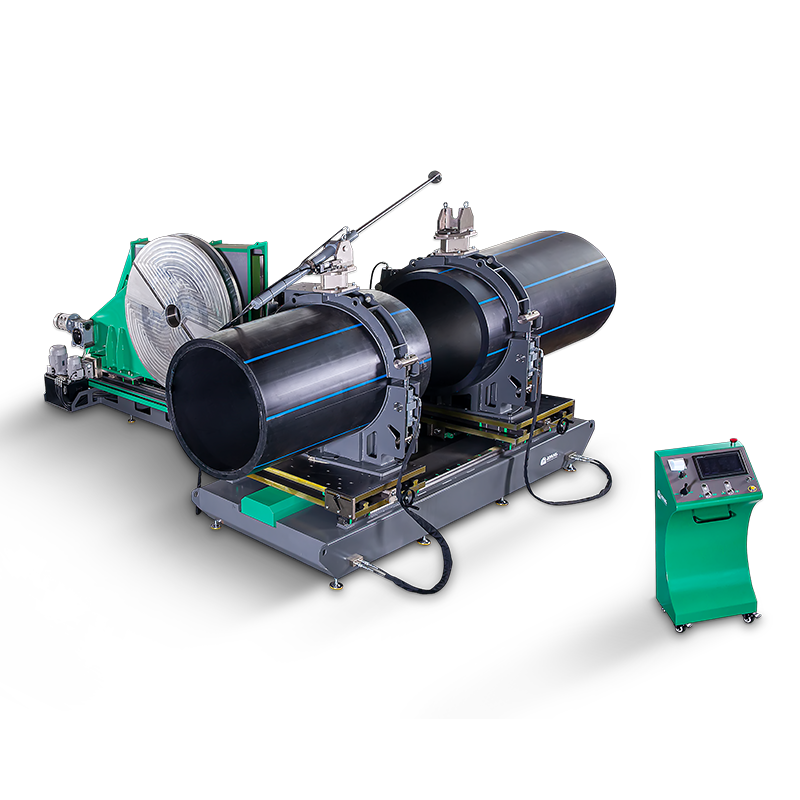
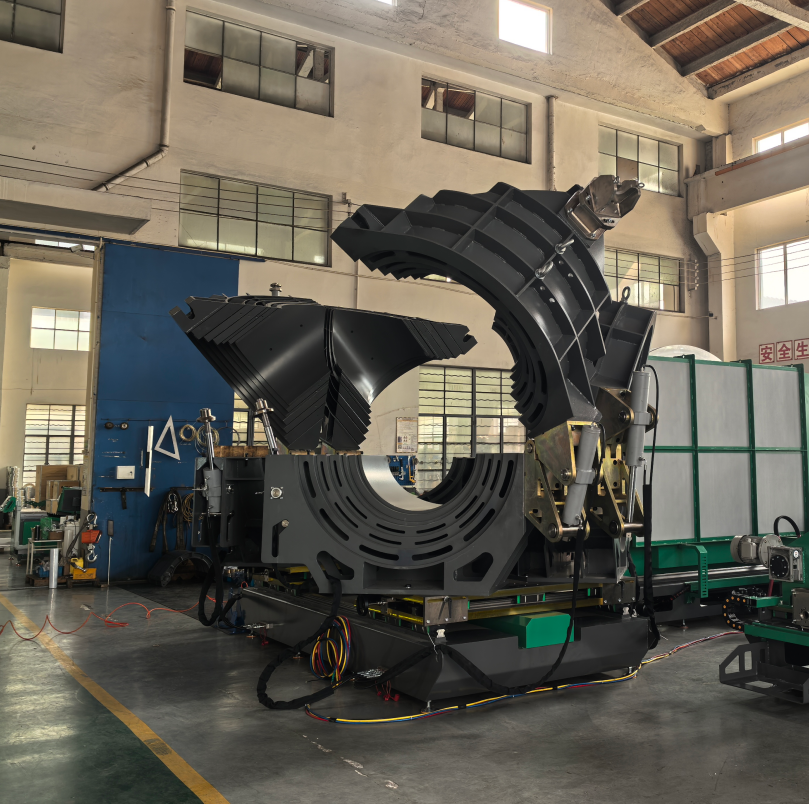
An HDPE fitting fabrication machine is a workshop butt-fusion system that joins cut pipe segments into made-to-order fittings such as elbows, tees, crosses, and wyes. Instead of molding a fitting, it welds angled segments together under controlled heat and pressure. Choosing the right machine comes down to four things: the fitting types you produce, the pipe OD and SDR range, the clamping configuration, and whether you need manual hydraulic control or CNC automation.
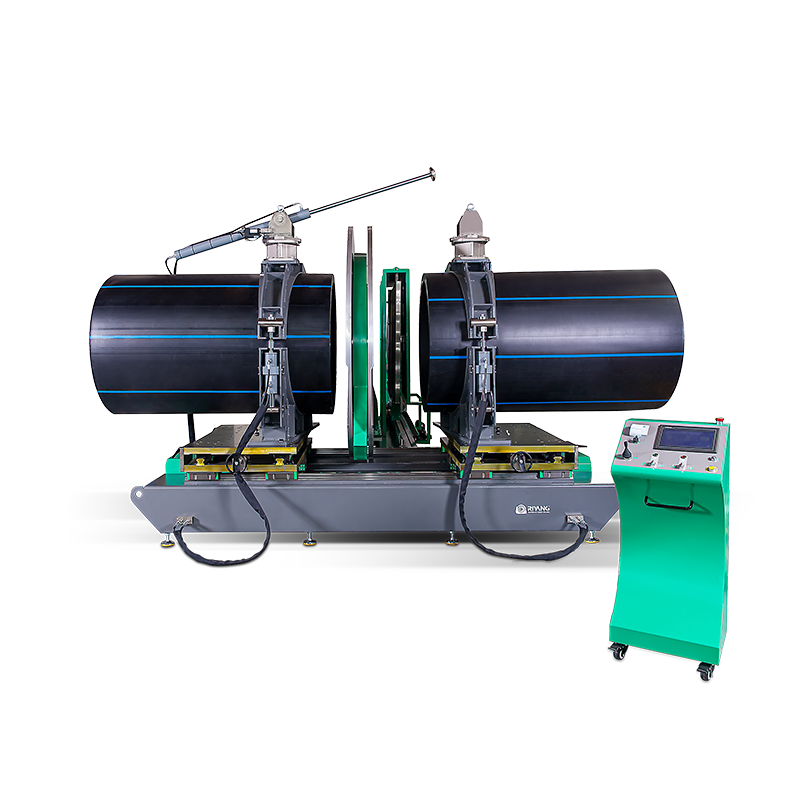
What a Workshop Fitting Fabrication Machine Produces
A fitting fabrication machine (also called a fitting welder or mitering machine) is a dedicated butt-fusion station built for the workshop rather than the trench. Where a field butt-fusion machine joins two straight pipe ends in line, a fitting machine positions one or more prepared pipe segments at a controlled angle and fuses them into a finished fitting. The underlying principle is the same butt-fusion cycle used on straight pipe: the mating faces are trimmed flat, heated against a plate, and pressed together under controlled force until the joint cools.
What changes is the geometry. The same machine family can typically produce:
- Segmented (mitred) elbows at angles such as 11.25°, 22.5°, 30°, 45°, 60°, and 90°
- Equal tees
- Equal Crosses (four-way fittings)
- Wyes, commonly at 45° or 60° branch angles
A HDPE fitting machine is not a mold or an injection unit. The final shape comes from the segment geometry prepared on a saw plus the clamp positions set on the machine. This is why a fitting machine is normally specified together with a matching multi-angle pipe band saw, as covered later in this guide.
Segmented Elbows and the Cut Angles Behind Them
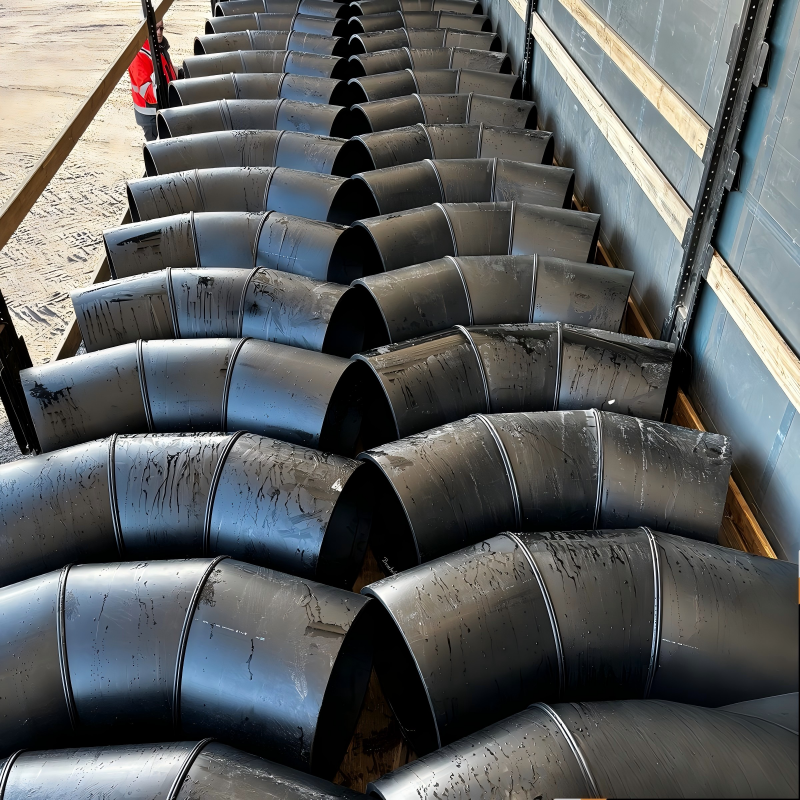
Segmented elbows are built from two or more angled pipe segments. The geometry follows a straightforward rule: the total bend angle is divided across the number of segments, and each segment end is cut to half of its segment angle so the mating faces meet squarely.
For example, a 90° elbow made from three segments uses two miter joints, and a common layout cuts each mating face at 22.5° so the three segments add up to 90°. A 45° elbow typically uses two segments with 22.5° cuts. Finer multi-segment elbows used on large diameters or where smoother flow is required use smaller individual angles, such as 11.25° or 15°.
Cut accuracy is the largest single variable before fusion. A face that is off by even one degree leaves a visible gap that the fusion step cannot reliably correct, and a mismatched face reduces the contact area of the joint. For this reason, the saw and the fitting machine should both be specified for repeatable angular positioning rather than eyeballed by hand.
Tees, Crosses and Wyes
Beyond elbows, a fitting machine produces the branch and transition fittings that a straight butt-fusion machine cannot make on its own:
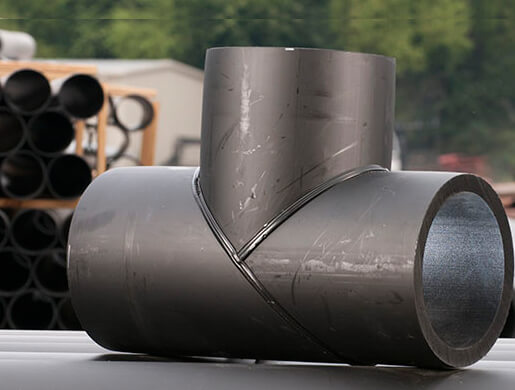
- Tees: a straight run with a branch fused at 90°. Equal tees use the same size for run and branch; reducing tees join a smaller branch to a larger run.
- Crosses: two 90° branches in the same plane, producing a four-way fitting.
- Wyes: a branch leaving the run at an angle (commonly 45° or 60°), giving a smoother, lower-resistance flow path than a 90° tee.
Each fitting type needs its own clamp geometry. A 90° tee or cross requires clamping faces set at right angles, while a wye needs clamps indexed to the branch angle. Because of this, the clamp set, not just the pipe size, determines what a given machine can actually fabricate. When comparing machines, confirm which clamp types are standard and which are options.
Clamping Configurations and Removable Jaws
The clamp system is the heart of a fitting machine. It holds each pipe segment at a fixed position and angle while the facer and heating plate work. Typical configurations include:
- Elbow clamps (left and right) that pivot or index to the required miter angle
- Tee and cross clamps set at 90°
- Wye clamps set at 45° or 60°
Removable jaws, or inserts, let one machine cover a range of pipe ODs. Inserts are commonly supplied in ISO (metric), IPS (inch), and DIPS (ductile iron pipe size) systems, so a workshop serving different markets can switch between standards without buying separate machines. Note that a machine rated to a maximum OD does not automatically include every smaller insert; confirm the insert coverage you actually need before ordering.
Hydraulic vs. CNC Control: Choosing the Right Drive
HDPE Fitting machines fall into two broad control families, and both apply the same fusion physics. The difference is in control, repeatability, and documentation, not in weld strength.
| Factor | Manual / Hydraulic | CNC / Servo |
|---|---|---|
| Clamp and angle setup | Set by hand | Set by hand |
| Heater and facer drive | Servo-driven | Servo-driven |
| Interface | Levers or buttons | Touch screen with guided steps |
| Data logging | Usually optional | Common or integrated |
| Remote diagnostics | Rarely | Available on many CNC models |
| Best fit | Lower volume, mixed batches | Higher volume, repeatable work |
Manual mode fitting machines are simpler, and they suit workshops with varied, low-volume jobs and modified welding standard. CNC machines add guided fusion prompts, consistent motion, and often data logging and remote support, which matter where welds must be repeatable and documented. The choice is a productivity and traceability decision; either machine must still be run to the correct fusion parameters.
Pairing the Machine with a Multi-Angle Pipe Band Saw
A HDPE fitting machine fuses segments that a saw prepares, so cut quality directly limits weld quality. Square, accurate, chip-free faces are the prerequisite for a sound butt weld. A dedicated multi-angle band saw cuts pipe at repeatable angles, commonly up to about 67.5° for a single cut, with aids such as laser-guided alignment and adjustable feeding speed.
Manual cutting is slow and inconsistent, and small angle errors compound into segments that do not seat correctly in the clamps. For production work, the saw and the fitting machine should be matched by pipe OD range so the same pipe can be cut and fused without re-handling. An electric, oil-free saw also lowers maintenance and keeps the cutting area cleaner. Riyang supplies both fitting fabrication machines and multi-angle pipe band saws, which makes it practical to specify a matched pair for one pipe range.
Pipe OD, SDR, and Material Compatibility
A fitting machine is specified for a pipe OD range, such as 90–315 mm or 90–400 mm, rather than a single size. Wall thickness, expressed as SDR or DR, affects two things: the heating and cooling time per joint, and the fusion force needed to press the softened faces together. Thicker walls (a lower SDR, such as SDR 11) need more heat input and longer soak and cooling times than thinner walls (a higher SDR, such as SDR 17 or SDR 21).
Mandatory standards vs. manufacturer recommendations
Fusion parameters are not chosen freely. The applicable welding standard, commonly ISO 21307, DVS 2207-1, or ASTM F2620 depending on region and project specification, sets the parameter envelope, while the pipe and fitting resin manufacturer supplies the specific values for its material. A machine's built-in parameter tables are a convenience, not a substitute: always verify against the standard and the material datasheet required by the project.
Material compatibility is a further filter. Most fitting machines handle HDPE (PE 100 and PE 80) as the primary material, with PP and PVDF supported on many models. If you fabricate PP or PVDF, confirm the temperature range and control resolution with the manufacturer, since these materials fuse at different temperatures than polyethylene.
Production Workflow and Quality Control
A typical fabrication cycle follows the same sequence as straight butt fusion, applied to angled segments:
- Cut each segment to the required angle and length on the band saw.
- Load the segments into the appropriate clamps and set the angle.
- Face both mating surfaces with the facer to create clean, parallel, oxide-free faces.
- Heat the faces against a PTFE-coated plate at the specified temperature.
- Remove the plate and join the faces under controlled fusion pressure.
- Hold under pressure through the full cooling time.
- Inspect the bead and record parameters where data logging is used.
Quality control for fabricated fittings follows the same principles as straight butt fusion: a uniform double bead on both sides of the joint, no excessive misalignment, and no contamination. For projects that require traceability, a data-logging option records time, temperature, and pressure for each joint, which is valuable when fittings must be certified.
Capacity, Tooling, and a Buyer Checklist
When comparing machines, look beyond the maximum diameter. The factors below determine whether a machine fits your actual work:
- OD range and insert coverage (metric, IPS, DIPS)
- Fitting types supported (elbow, tee, cross, wye)
- Clamp types included as standard versus options
- Drive type: manual hydraulic versus CNC
- Data logging and remote diagnostics availability
- Power supply and workshop footprint
- Warranty, spare parts, and available training and support
If you are evaluating systems for a specific fitting range, explore Riyang's ATLA fitting fabrication systems to compare manual and CNC models side by side.
Frequently Asked Questions
What is an HDPE fitting fabrication machine?
It is a workshop butt-fusion machine that joins cut pipe segments into fittings such as elbows, tees, crosses, and wyes, rather than joining two straight pipe ends in the field.
Can one machine make elbows, tees, crosses, and wyes?
Many machines can, but only if the corresponding clamp types are fitted. Confirm that elbow, tee, cross, and wye clamps are included or available for the model you are considering.
Do I need a band saw together with a fitting machine?
Yes for production work. A dedicated multi-angle band saw cuts segments at repeatable angles, and cut accuracy directly limits how well the segments seat and fuse.
What materials can these machines weld?
HDPE is the primary material, with PP and PVDF supported on many models. Confirm the temperature range with the manufacturer if you work with PP or PVDF.
What is the difference between a hydraulic and a CNC fitting machine?
Both apply the same fusion process. Hydraulic machines are simpler and hand-controlled; CNC machines add servo-driven motion, guided prompts, and often data logging and remote diagnostics.
Which standards apply to fabricated HDPE fittings?
Butt-fusion parameters are commonly governed by ISO 21307, DVS 2207-1, or ASTM F2620, depending on region and project specification, together with the pipe and resin manufacturer's datasheet values.
Key Takeaways
- A fitting fabrication machine welds cut segments into elbows, tees, crosses and wyes rather than molding them.
- Segmented elbow geometry depends on accurate, repeatable cut angles, so the saw matters as much as the welder.
- The clamp set, not just the pipe size, determines what fittings a machine can fabricate.
- Hydraulic and CNC machines apply the same fusion physics; the choice is about control, repeatability, and documentation.
- Fusion parameters must follow the applicable standard and material datasheet, not the machine defaults alone.
References
- Riyang — Fitting Fabrication Machines: /products2115521/Fitting-Fabrication-Machines.htm
- Riyang — Pipe Band Saws: /products2115524/Pipe-Band-Saws.htm
- ISO 21307, DVS 2207-1, and ASTM F2620 — referenced butt-fusion joining standards
For a recommendation matched to your pipe range and fitting mix, contact Riyang or browse hdpe fitting fabrication machines.