HDPE Pipe Welding Machine Price: What Determines the Real Cost of a Fusion Machine?
- Share
- publisher
- Riyang
- Issue Time
- Aug 3,2026
Summary
HDPE pipe welding machine price is not a fixed number. It depends on pipe diameter range, control type (manual, hydraulic, or CNC automatic), mobility configuration, data-logging capability, and after-sales support. This article explains the seven cost drivers that determine the real price of a butt fusion machine and provides a line-item quote checklist for buyers.
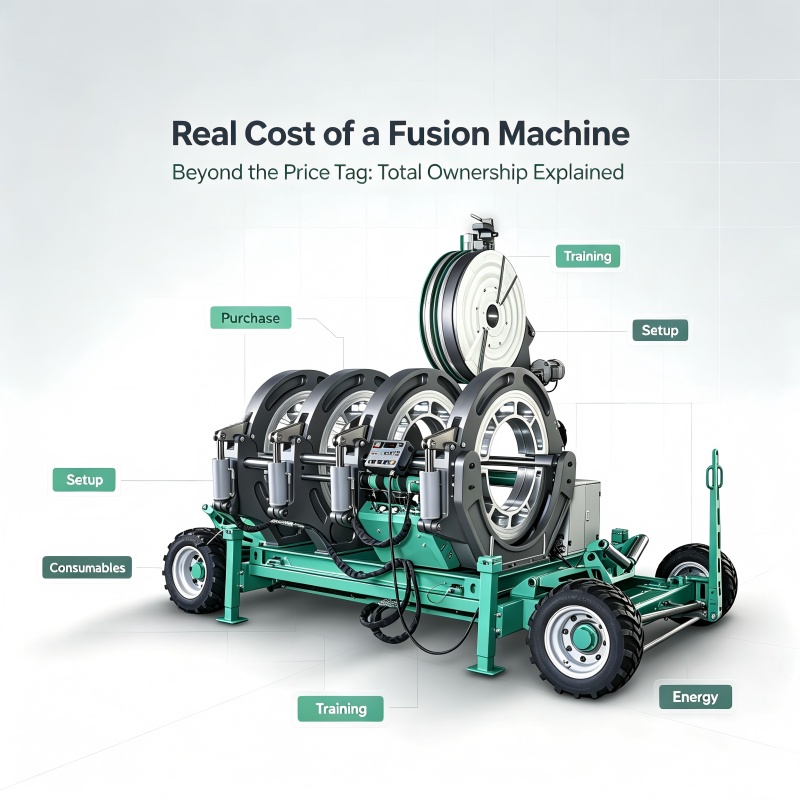
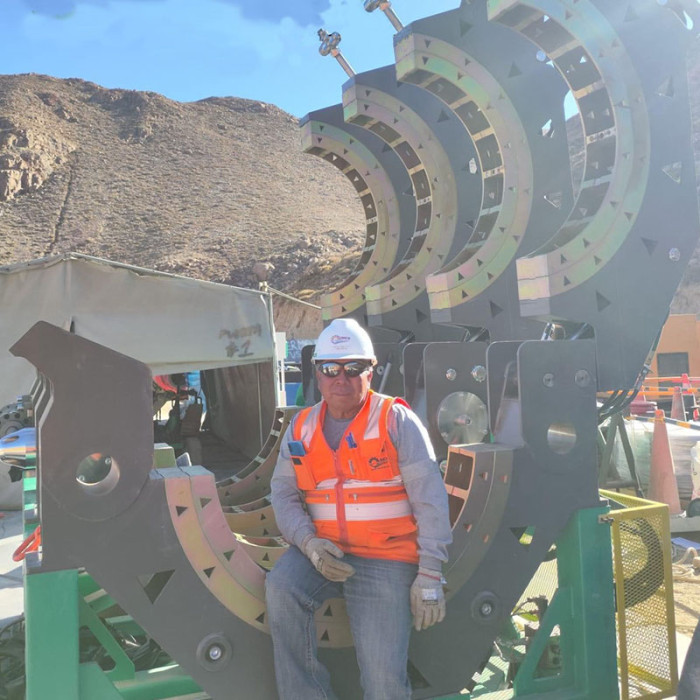
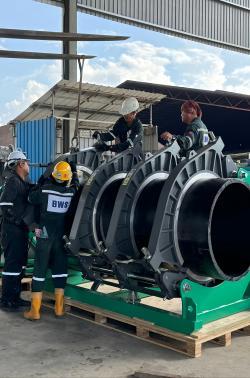
HDPE pipe welding machine price is not a single number on a price list. It reflects pipe diameter range, hydraulic or manual control level, mobility configuration (trailer, tracked, or stationary), data-logging capability, and after-sales support. A machine that welds 63–160 mm pipe costs significantly less than one rated for 630–1200 mm. Understanding these drivers helps buyers compare quotations meaningfully, not just by the bottom line. Two machines listed with the same nominal pipe range can differ in price by a factor of three or more. Several factors explain the spread. First, control type: a purely manual machine with lever-operated carriage movement costs far less than a hydraulic model with a power pack and pressure gauge, which in turn costs less than a CNC automatic machine with a programmable logic controller (PLC) and data logger. Second, what is included varies. One supplier may quote a bare frame without inserts, while another includes the full set of reduction inserts, a hydraulic power unit, heater plate, facer, and a transport case. Freight, customs duties, and local certification fees are sometimes quoted separately and sometimes bundled. Third, regional market conditions, import tariffs, and after-sales service commitments all influence the final delivered price. Buyers should always request a line-item quotation rather than comparing headline prices alone. The level of automation is the single largest price differentiator across the butt fusion machine market. Manual machines rely on operator-applied force via levers or hand wheels to move the carriage and generate fusion pressure. They typically cover pipe diameters up to 160 mm and cost the least. They are portable and simple to maintain, but they lack pressure measurement, which means the operator cannot verify fusion pressure against the project’s qualified welding procedure. Many municipal and gas-network specifications require hydraulic or automatic control for traceability reasons. Hydraulic machines use a power pack to drive the carriage, with a pressure gauge allowing the operator to set and verify fusion pressure. This is the most common configuration for medium- to large-diameter work (160–3000 mm). The hydraulic unit, gauge, hoses, and couplings all add cost relative to a manual machine, but they provide the pressure control and repeatability required by most infrastructure welding procedures. Automatic machines add a PLC that guides the operator through each phase of the welding cycle—bead-up, heating, changeover, and cooling—and records the actual parameters. These machines command the highest price because they integrate sensors, data storage, and often an onboard touchscreen. For projects that demand full joint traceability, the premium is justified by reduced rework risk and auditable records. The pipe outside diameter (OD) a machine must accommodate directly dictates frame size, clamping force, and hydraulic capacity—and therefore cost. A machine rated for 63–315 mm OD uses a smaller frame, lighter clamps, and a lower-force hydraulic cylinder. As the diameter range increases to 315–630 mm, the frame must be substantially stiffer, the clamping jaws larger, and the hydraulic cylinder capacity increases in proportion to the required fusion force. For large-diameter machines rated 800–3000 mm, the structural engineering, hydraulic power, and material costs all rise steeply. Wall thickness (expressed as SDR) also matters. A thinner-wall pipe (higher SDR number) requires less fusion force than a thick-wall pipe (lower SDR number) of the same OD. Consequently, the same machine may be capable of welding SDR 17 pipe at a given OD but may not generate enough force for SDR 7 at that same diameter. Always check the manufacturer’s maximum fusion force specification against the required fusion pressure for the specific pipe SDR. We will talk about the differences between low pressure machine and high pressure machine soon in another blog. Mobility adds cost but determines where and how efficiently the machine can work. A basic stationary machine on a steel frame is the most economical option for workshop or fixed-yard use. Adding a wheel kit or rolling undercarriage makes on-site repositioning easier. A full trailer-mounted configuration—with integrated generator, hydraulic unit, and tool storage—substantially increases cost but converts the machine into a self-contained jobsite unit that can be towed between fusion stations along a pipeline route. Tracked self-propelled configurations, designed for rough terrain, mud, and slopes, represent the highest mobility cost tier. These machines carry their own power source and can navigate conditions where wheeled trailers cannot operate. The additional engineering, drive systems, and weather protection all contribute to the price. Data logging capability is increasingly specified for water, gas, and industrial projects that require joint-by-joint traceability. A basic data logger records heater temperature, drag pressure, fusion pressure, bead-up time, heating time, changeover time, and cooling time for each joint. Advanced systems add GPS tagging, barcode or RFID scanning for pipe and fitting traceability, operator login, and PDF/CSV export functions. Some CNC machines embed the data logger within the machine controller, while others accept a plug-in logger module that can be purchased separately. The cost of data-logging hardware and the software license varies, and buyers should confirm whether the logger is included in the machine price or quoted as an optional extra. It is important to note that data logging records operating parameters; it does not replace a qualified welding procedure or trained operator. The logger reports what happened, but the procedure and operator determine whether the joint meets specification. Several costs outside the machine frame itself can add 15–30% to the total acquisition cost. The purchase price only tells part of the story. Evaluating total cost per welded joint over the machine’s service life gives a more complete picture. A lower-cost manual butt fusion machine may produce fewer joints per day due to slower cycles and higher operator fatigue. A hydraulic butt fusion machine with faster carriage travel and consistent pressure control can achieve higher daily productivity. An automatic CNC machine can reduce the scrap rate (failed or suspect joints) by eliminating manual timing and pressure-setting errors. Downtime is the hidden cost multiplier. A machine that cannot hold pressure, has a failed heater plate, or is waiting for spare parts delays the entire pipeline installation. The cost of idle crews, equipment standby, and project penalty clauses often far exceeds the difference between a basic and a well-supported machine. Supplier responsiveness—spare-parts availability, technical support, and warranty terms—should be evaluated alongside the price. Before comparing quotations, confirm that every supplier has addressed the same scope. Use the checklist below to standardize your enquiry. Price differences typically reflect control type (manual vs CNC), build quality, included accessories (inserts, data logger, trailer), certification testing, and after-sales support. A bare manual frame can cost a fraction of a trailer-mounted CNC machine with full traceability, even if both can weld the same pipe OD. For small-diameter, low-pressure, non-critical applications, a manual machine may be adequate. However, if the project requires documented fusion pressure, joint traceability, or must satisfy a qualified welding procedure, a hydraulic or automatic machine is necessary. Many water and gas specifications explicitly require hydraulic control. Not necessarily. Data logging is typically required for projects where each joint must be traceable—common in gas distribution, large-diameter water mains, and nuclear or industrial applications. For agricultural irrigation or temporary above-ground lines, a logger may not be specified. Check your project’s quality requirements before deciding. Reduction inserts and freight are often overlooked. A machine quoted with one insert set may require five or six additional sets to cover the full working range. Ocean freight and inland delivery can be substantial for heavy equipment shipped internationally. With proper maintenance—regular hydraulic oil changes, heater plate calibration, facer blade replacement, and clamp-jaw care—a well-built hydraulic butt fusion machine can operate reliably for ten years or more in normal field conditions. Spare-parts availability from the manufacturer is key to achieving this service life. If you are evaluating a machine purchase, request a complete quotation covering machine, inserts, accessories, training, and delivery from the manufacturer.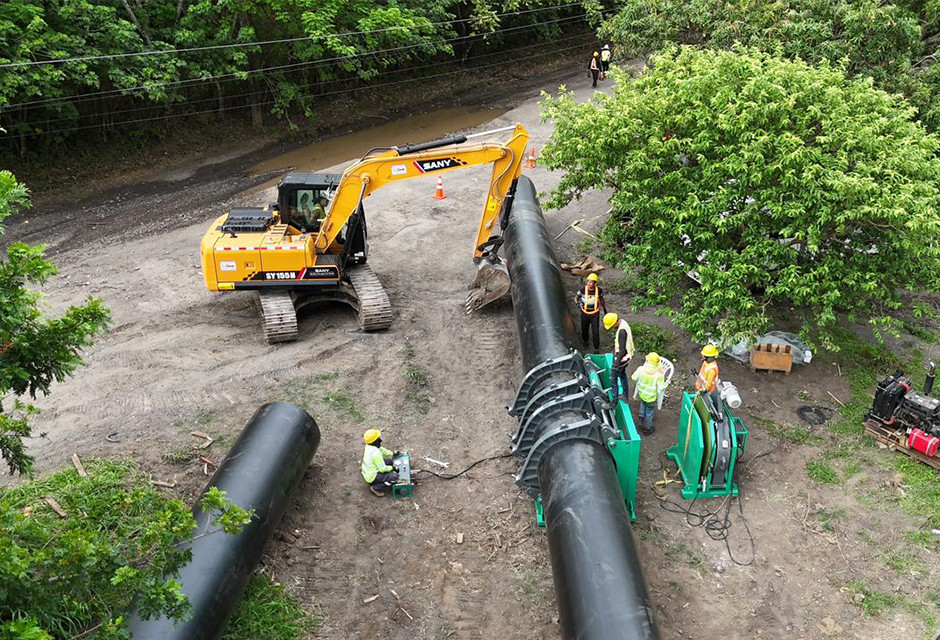
1. Why Online HDPE Pipe Welding Machine Prices Vary Widely
2. Manual vs Hydraulic vs Automatic: How Control Type Shapes the Price
Manual Butt Fusion Machines
Hydraulic Butt Fusion Machines
Automatic/CNC Butt Fusion Machines
3. Pipe Diameter and Frame Requirements: The Biggest Cost Driver
4. Trailer, Tracked, and Self-Contained Configurations
5. Data Logging, CNC, and Traceability: The Digital Premium
6. Freight, Spare Parts, Inserts, and Training: The Hidden Line Items
7. Total Cost per Joint and the Real Cost of Downtime
8. Quote Checklist: What to Ask Before You Buy
Item Confirm In Quotation Pipe OD range Minimum and maximum OD, with SDR limits Control type Manual / Hydraulic / Automatic (PLC) Clamp inserts Which sizes are included; cost of additional sets Hydraulic power pack Included or separate; pressure gauge specification Heater plate Surface coating (PTFE), temperature controller specification Facer Electric or hydraulic drive; spare blade set included Data logger Included, optional, or not available; export format Mobility Stationary / trailer / tracked Freight Delivery terms (Incoterms), estimated cost, transit time Spare parts Recommended first-year spares list and pricing Training On-site or factory training; cost and duration Warranty Duration, coverage, and service-response commitment 9. Frequently Asked Questions
Why are some HDPE fusion machines priced five times higher than others with the same pipe range?
Should I buy a manual machine to save money?
Do I need a data logger on every machine?
What is the most overlooked cost when buying a fusion machine?
How long should a quality butt fusion machine last?
10. Key Takeaways
11. References