In-Ditch Butt Fusion: How to Select a Compact Machine for Trench and Restricted-Space Work
- Share
- publisher
- Riyang
- Issue Time
- Aug 13,2026
Summary
In-ditch butt fusion welds HDPE pipes inside a trench, where clearance and access are limited. This guide explains how to choose a compact fusion machine for trench and restricted-space work, covering footprint and component weight, removable or convertible clamps, pipe alignment, heater and facer insertion, cable and hose management, and contamination control. Includes a pre-job checklist, FAQs, and key takeaways for contractors and utilities planning underground PE pipe installations.
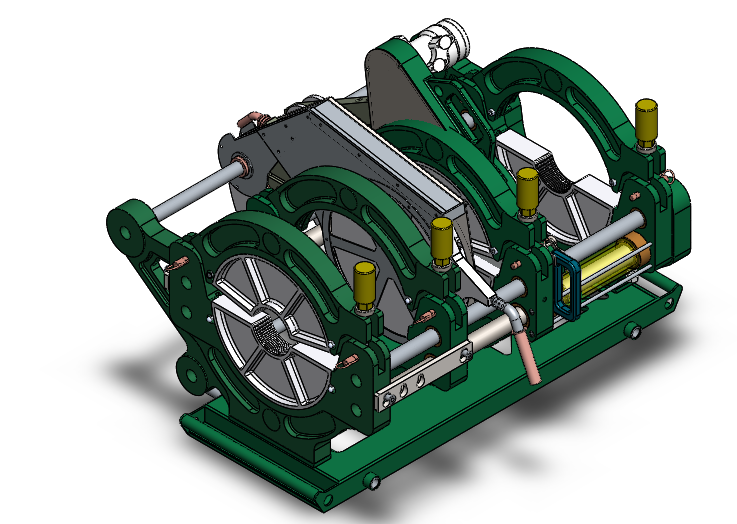
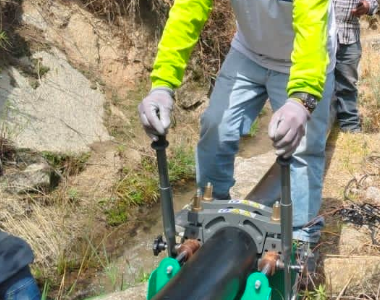
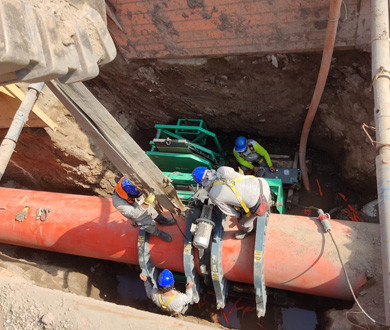
In-ditch butt fusion joins HDPE pipes inside a trench, where clearance above the pipe is measured in millimetres rather than metres. The right tool is a compact, low-profile butt fusion machine a crew can lower, align, and operate without a crane—ideally with removable or convertible clamps, a lightweight carriage, and a facer and heater plate that slide in from the side. Prioritise reachable controls, clean cable routing, and enough headroom for a full fusion cycle. The butt fusion process itself—facing, heating, fusion, and cooling under pressure—is identical whether the pipe is on rollers in an open field or lying at the bottom of an excavation. What changes is how you physically access the joint. On an open site you have full 360-degree access, room to swing pipe ends, and usually a crane or excavator for handling. In a trench you are working inside a narrow cut with limited headroom, often with shoring or trench boxes in place. That single difference drives every machine-selection decision. A machine that is easy to use on flat ground can become nearly unusable when the operator cannot stand beside it, when the heater plate has to be lowered past a strut, or when a pipe end has to be fed into the clamp from a restricted angle. The jointing procedure parameters defined by the applicable pipe standard or project specification do not change—what changes is the handling, alignment, and access required to hold those parameters steady. For in-ditch work the number that matters most is not the machine's total mass but its component weight: how the carriage, clamp inserts, facer, heater plate, hydraulic power pack, and control unit break down into individual lifts. A compact machine that splits into lighter sub-assemblies can be handed down into a trench by two people, while a heavier single-piece carriage may need a davit or hoist that the trench simply cannot accommodate. Look at three dimensions on the specification sheet: the machine's height above the pipe when clamped, its overall width relative to the trench floor, and the mass of the heaviest single component. A low-profile frame that sits close to the trench floor reduces the clearance needed to insert and withdraw the heater plate and facer. Manufacturer data sheets should list per-component mass; do not rely on total machine weight alone when planning a lift. A removable-clamp or convertible-clamp machine uses interchangeable clamp inserts so a single carriage can grip a range of pipe outside diameters. For trench work this matters for two reasons. First, it reduces the number of separate machines a crew must keep on site. Second, individual clamp segments are lighter to handle than a fixed jaw sized for the largest pipe, which helps when the clamp has to be passed down into the cut. Some compact machines use clamp shells that hinge open or detach entirely, allowing the pipe to be lowered in from above rather than threaded through from the end—a real advantage when a trench end is boxed or blocked. This is a manufacturer design feature rather than a standard requirement, so confirm the clamp insert range and the swap procedure for the specific model. For smaller-diameter work, manual butt fusion machines with removable inserts offer a simple, lightweight option. Correct alignment is a hard requirement for a sound joint: the pipe ends must butt squarely with any offset within the tolerance given by the governing standard or project specification. In a trench this is harder to achieve because there is little room to swing a pipe end into line. Rollers, slings, and come-alongs are used to bring the ends together before clamping, and the ends are checked for ovality and offset once seated. If the offset is outside tolerance, the ends must be re-aligned and re-faced before heating begins. Plan for enough clear length in the trench to correct alignment without forcing the pipe, because a forced joint in a trench is far more difficult to rework than one on the surface. The facing step squares the cut ends and removes oxidised surface material, so a clean face is the baseline for every cycle. On most trench jobs the hydraulic power pack and generator stay at the surface, with hoses and cables running down into the cut to the machine. Keep those lines away from the heater plate—a hot plate will melt through a hose jacket or cable insulation in seconds—and route them clear of the moving clamp and of the operator's footing. Quick-release hydraulic couplers make it faster to reposition the machine along the trench between joints. Leave enough slack for the machine to travel the full length of the run without the hoses pulling tight, and size the generator for the power pack and heater plate load so voltage does not sag mid-cycle. Clean hose and cable management is part of weld quality control, not just housekeeping: a tripped or snagged line that interrupts a fusion cycle can force a re-face and re-weld. For a broader look at how machine configuration affects day-to-day use, see Riyang's butt fusion welding machines. A trench is a hostile environment for a fusion joint. Water, mud, and dust all threaten the weld, and wind can cool the heater plate unevenly. Keep the pipe ends clean and dry before facing, and wipe surfaces with lint-free cloths and isopropyl alcohol in line with the project's procedure—low-percentage wipes can leave moisture that interferes with fusion. Where the ground is wet, bench or dewater the trench so the machine is not sitting in standing water. Shelter the joint with a tent or enclosure when wind or rain is present, and protect the machine from dust that settles on the heater plate between cycles. The same good-practice rules that apply on the surface—clean plate, dry pipe ends, a dummy weld at the start of a shift—matter more in a trench because contamination is harder to see and harder to fix once a pipe is buried. Ask Riyang about compact and removable-clamp configurations. The right machine is the one whose footprint, clamp range, and component weights actually fit your trench dimensions and pipe schedule. Send an inquiry with your pipe OD, SDR, and site clearance, and we will help you match a configuration to the job. Not practically. A machine's footprint, height above the pipe, and how its components split for handling determine whether it can be lowered, aligned, and operated in a restricted cut. Machines designed with a low profile and removable clamps are better suited to in-ditch work. Butt fusion is generally applied to pipe from around 90 mm OD upward, with some specifications allowing smaller diameters under controlled conditions. In-ditch fusion is most common on the smaller-to-mid end of that range, where a compact machine can still be handled without a crane. It is a practical advantage, not a standard requirement. Removable or convertible clamps cut the weight of individual components and let one carriage cover several pipe sizes, which simplifies work in a confined trench. Protect the plate from dust and splatter between cycles, wipe the pipe ends with lint-free cloths and isopropyl alcohol before facing, and shelter the joint from wind and rain. A clean, dry plate is essential to a consistent heat cycle. There is no single figure—clearance depends on the specific machine's height above the pipe and its heater and facer insertion path. Check the manufacturer's dimensional drawings against your trench width and headroom before the job starts. Selecting an in-ditch fusion machine comes down to footprint, component handling, clamp configuration, and access. If you are planning underground PE pipe work and want a compact configuration matched to your pipe sizes and trench dimensions, contact Riyang to discuss removable-clamp and low-profile options.
Why Trench Fusion Differs from Open-Site Fusion
Machine Footprint, Weight, and Component Handling
Machine Configuration Comparison for Restricted-Space Work
Configuration Footprint & Access Pressure Control Best Fit Manual compact Lightest, hand-carried, narrowest Manual lever, no data log Small diameters, short repair stubs Hydraulic compact Split components, low profile Hydraulic, consistent pressure Mid-diameter trench mains Standard hydraulic Wider, taller, crane or hoist Hydraulic, full data logging Open-site or wide-bench work Removable or Convertible Clamp Configurations
Pipe Alignment in Restricted Spaces
Generator Cables and Hydraulic Hose Management
Environmental Protection and Contamination Control
Pre-Job Checklist for In-Ditch Fusion
Frequently Asked Questions
Can any butt fusion machine be used in a trench?
What pipe sizes suit in-ditch fusion?
Do I need a removable-clamp machine for trench work?
How do I keep the heater plate clean in a muddy trench?
What clearance does a compact fusion machine need?
Key Takeaways
References