Large-Diameter HDPE Pipe Fusion Above 630 mm: Machine, Handling, Power, and Site Requirements
- Share
- publisher
- Riyang
- Issue Time
- Aug 10,2026
Summary
Fusing HDPE pipe above 630 mm requires more than a bigger machine frame. This guide covers fusion-force demands, pipe ovality and alignment, heater and facer power supply, roller support systems, changeover timing, cooling productivity, data logging, and a practical machine-selection checklist by diameter range.
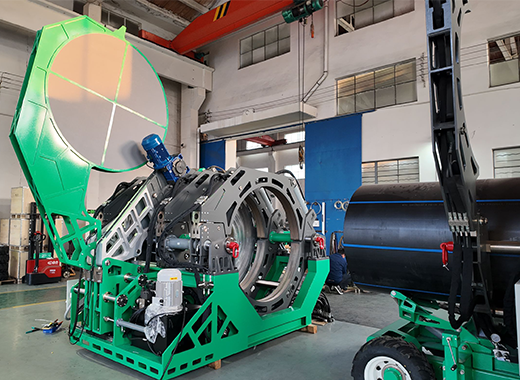
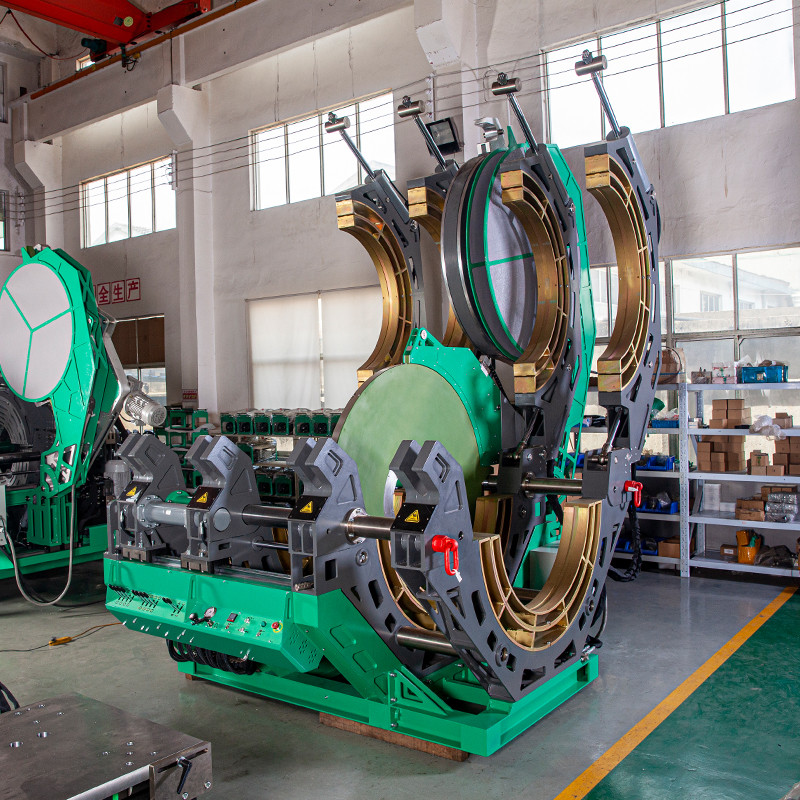
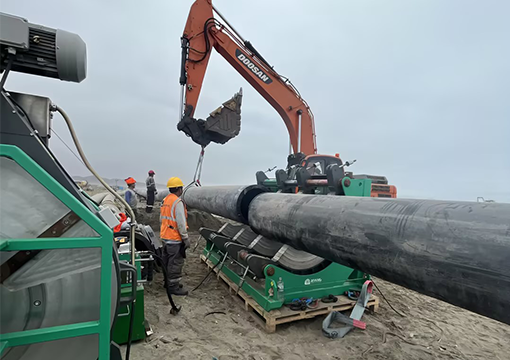
Fusing HDPE pipe above 630 mm OD is not simply a matter of selecting a machine with a larger frame. Large-diameter butt fusion is a complete handling and power system: it demands hydraulic force measured in tens or hundreds of tonnes, heaters and facers with multi-kilowatt power supplies, pipe lifting and roller support infrastructure, and rigorous environmental control. Understanding these interdependent requirements before procurement is essential to achieving consistent, traceable fusion joints on large-bore pipelines. The hydraulic force required for butt fusion grows with the cross-sectional area of the pipe wall, not linearly with diameter. Fusion force is calculated from the pipe's fusion area multiplied by the specified interfacial pressure for the material. For HDPE (PE100), interfacial pressure parameters are defined in ISO 21307 and related welding procedure specifications. As pipe diameter increases, the wall area increases roughly with the square of the diameter for a given SDR. An SDR 11 pipe at 1200 mm OD has a wall thickness of approximately 109 mm, and the fusion area exceeds 3700 cm². At a typical interfacial pressure range, this translates to a fusion pressure demand well above 100 tonnes of clamping force. Machines rated for 2000 mm pipe may require frame and cylinder assemblies capable of delivering 200–300 tonnes or more. Thicker walls (lower SDR) increase the fusion force requirement at any given diameter. SDR 17 pipe at 1200 mm demands less force than SDR 11 at the same OD, but requires proportionally longer heating and cooling times. The machine's hydraulic system must provide steady, regulated pressure across the full range; pressure fluctuation during the heating and cooling phases can compromise joint integrity. Large-diameter HDPE pipes are inherently more susceptible to ovality during transport and storage. Even minor deviation from circular cross-section can prevent proper facing and lead to incomplete contact during the heating and fusion phases. Machines intended for pipe above 630 mm typically employ multi-segment clamps with independent adjustment to re-round the pipe ends before clamping. Alignment is equally critical. Machines should provide both vertical and horizontal fine-adjustment capability. The frame must resist torsional and bending loads without deflection during clamping, facing and fusion. For very large diameters (1600 mm and above), machines often incorporate a rigid base frame with integrated pipe support arms to maintain alignment from loading through cool-down. Clamp inserts must match the specified OD; worn or incorrect inserts are a common cause of misalignment in the field. The heater plate for a 1200–2000 mm machine is a substantial electrical load. Surface area scales with diameter; a 1600 mm plate covers approximately 2 m². Maintaining uniform surface temperature across this area, typically within ±5°C to ±10°C of set point depending on the procedure, requires multiple independently controlled heating zones and total power ratings that may exceed 15–25 kW. PTFE-coated heater surfaces must be clean, intact and free of scratches. For large plates, visual inspection of the entire surface before each heating cycle is essential. Cold spots caused by failed heating elements or coating damage can produce localised under-heating that is not apparent from a single-point temperature reading. The facing tool (planer) for large diameters requires a motor capable of cutting a continuous chip across the full pipe wall without stalling. Facer drive power for machines above 1000 mm typically ranges from 2 kW to over 5 kW, and the cutting disc must be rigid enough to produce a flat, continuous face with no steps or grooves. Generator sizing must account for the combined peak load of heater, facer and hydraulic power pack, plus starting-current surge. Undersized generators are a frequent cause of heater temperature drop and hydraulic instability on large-diameter jobsites. Handling large-diameter HDPE pipe safely requires planning at least as detailed as the fusion procedure itself. A 6-metre length of SDR 11 PE100 pipe at 1200 mm OD weighs approximately 2.2 tonnes. At 2000 mm OD the same length exceeds 6 tonnes. Cranes, side-booms or excavators with pipe-handling attachments are the norm; operators must use soft slings or padded forks to avoid scoring the pipe surface. Pipe roller supports are essential for large-diameter fusion, not optional. Rollers reduce the drag pressure that the hydraulic carriage must overcome to move the pipe during facing and fusion. Without adequate roller support, the machine's carriage cylinders must work against the full friction of pipe on the ground, consuming available hydraulic force and potentially causing carriage hesitation during critical phases. Roller spacing should be determined by pipe stiffness; pipes supported at intervals that allow sag between rollers can introduce angular misalignment at the joint face. As a practical guideline, roller centres are typically spaced at 2–4 metres for pipe above 1000 mm, but the manufacturer's recommendation for the specific SDR should be followed. Changeover time — the interval between removing the heater plate and bringing the pipe ends into contact — is a critical parameter in every butt fusion procedure. For large diameters, the physical movement of a heavy heater plate across a wide gap introduces additional seconds that must be accounted for in the procedure timing. Many large-diameter butt fusion machines incorporate assisted heater plate extraction mechanisms (spring-loaded, pneumatic or hydraulic) to reduce changeover time and ensure consistent operator performance. The target maximum changeover time is specified in the applicable welding procedure; exceeding it risks surface cooling and an inadequate melt bond. Environmental conditions matter more at large diameters because the exposed melt surface area is proportionally larger. Wind, rain, dust and direct sunlight all affect the rate of surface cooling and the risk of contamination. For diameters above 1000 mm, it is common practice to erect temporary shelters or welding tents to control the micro-environment around the fusion zone. Ambient temperature extremes may require procedure adjustment as permitted by the project specification. Cooling time under pressure is the dominant cycle-time component for large-diameter fusion. ISO 21307 and related procedures specify minimum cooling times that are proportional to wall thickness. For SDR 11 pipe at 1200 mm (wall ~109 mm), the minimum cooling time under pressure may be in the range of 50–70 minutes per joint, depending on the specific procedure adopted. At 2000 mm (SDR 11, wall ~182 mm), cooling time can exceed 120 minutes. These durations make large-diameter fusion a low-throughput operation. On a long pipeline, multiple fusion machines may be deployed at staggered positions to maintain overall production rates. Alternatively, the project schedule must accept the joint cycle time as a constraint. Natural cooling under pressure is standard practice. Accelerated cooling (water spray, forced air) is generally not recommended unless explicitly permitted by the project's qualified welding procedure, as it can introduce residual stress gradients in the thick pipe wall. For large-diameter fusion joints, especially on pressure-rated pipelines for water, gas or industrial service, data logging is a de facto requirement. A fusion data logger records the actual temperature, pressure and time values during each phase of the weld cycle, creating a traceable record that can be compared against the target procedure. Parameters typically logged include heat soak pressure, bead-up pressure, fusion pressure, heater plate temperature (surface and set point), drag pressure measurement, changeover time, heat soak time, and cooling time. Some systems also record GPS coordinates, joint photographs, operator identification and pipe batch numbers for full traceability. Logged data can be exported as PDF or CSV for inclusion in project quality documentation. It is important to note that data logging records actual machine behaviour; it does not certify that the weld meets the standard. Qualified procedures and trained operators remain the foundation of joint quality. For operators looking to improve system-level quality, pairing a large-diameter butt fusion machine with a properly specified data logger and pipe roller support system delivers measurable gains in consistency and documentation readiness. Every large-diameter pipeline project has unique constraints — pipe specification, terrain, power availability, and quality documentation requirements. Contact Riyang to discuss a machine and handling configuration matched to your project parameters. Butt fusion machines rated for 2000 mm OD and above are commercially available from multiple manufacturers. The limiting factors are typically jobsite logistics — crane capacity, transport dimensions and power availability — rather than machine capability. Pipe above 2500 mm generally requires custom-engineered fusion equipment. The fusion pressure at the cylinder is calculated from: P_cylinder = (fusion_area × interfacial_pressure + drag_pressure_area × drag) / piston_area. The fusion area, drag pressure and piston area are machine-specific values. Refer to the machine manufacturer's pressure calculation table and the project's qualified welding procedure — do not rely on generic formulas. SDR is the starting point, not the full answer. Higher diameters at the same SDR have thicker walls, requiring longer heating and cooling times. Always follow the specific procedure qualified for the pipe diameter, wall thickness and material grade being welded. As a starting estimate, a 1600 mm machine with hydraulic power pack, heater plate and facer may require a 80–120 kVA generator. The exact figure depends on the specific machine model, the simultaneous load profile and site altitude. Always confirm with the machine supplier and include headroom for starting currents. While not universally mandated by every standard, data logging is effectively standard practice for large-diameter pressure pipelines. Many project specifications and asset owners require it as a condition of acceptance. Even where not contractually required, it provides the only objective record of actual fusion parameters. Large-diameter fusion typically requires a crew of 3–5 people: a qualified fusion operator, one or two assistants for pipe handling and alignment, and support personnel for crane/excavator operation and generator management. The exact number depends on pipe weight, site conditions and the machine's level of automation. Selecting the right fusion system for large-diameter pipe requires evaluating machine capacity, handling equipment, power infrastructure and quality documentation as one integrated package. Request a large-diameter project configuration from Riyang — include your maximum pipe OD, SDR and project environment for a tailored recommendation.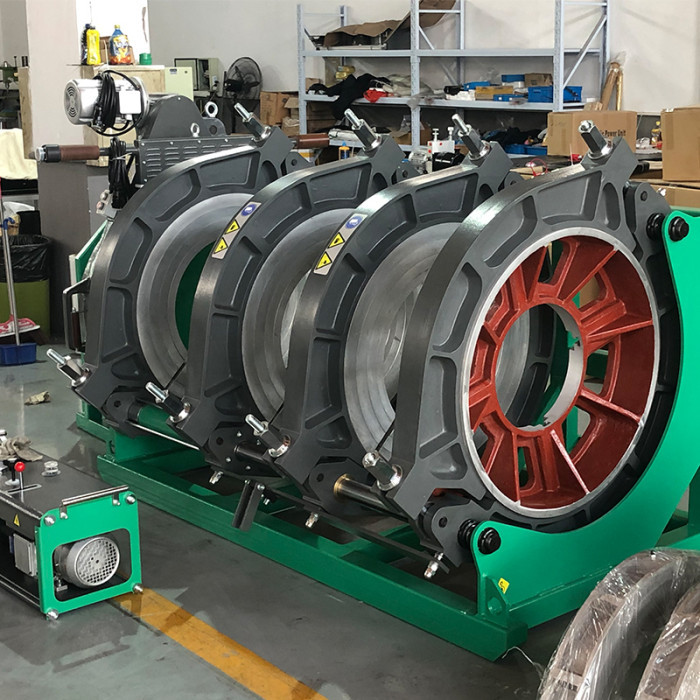
Fusion-Force Demands: Diameter, SDR and Wall Thickness
Pipe Ovality, Alignment and Clamping Stability
Heater Plate and Facer Power Requirements
Pipe Lifting, Rollers and Safe Handling
Changeover Time and Environmental Control
Cooling Time and Productivity Planning
Data Logging and Quality Records
Large-Diameter Machine Selection Checklist
Requirement 630–1000 mm 1000–1600 mm 1600–2000 mm Fusion force capacity 40–100 tonnes 100–200 tonnes 200+ tonnes Heater power (typical) 5–12 kW 12–20 kW 20–30 kW Facer motor power 2–3 kW 3–5 kW 5+ kW Generator (min recommended) 30–58 kVA 58–120 kVA 120–200 kVA Clamp configuration 4–6 segment 6–8 segment 8+ segment Pipe roller support 2–4 rollers 4–6 rollers 6+ rollers Heater extraction Manual/assisted Assisted Powered Data logging Optional/recommended Strongly recommended Essential Weather protection As needed Recommended Essential Frequently Asked Questions
What is the largest HDPE pipe that can be butt-fused?
How do I calculate the hydraulic fusion pressure for large diameters?
Can I use the same SDR procedure for all large diameters?
What generator size do I need for a 1600 mm machine?
Is data logging mandatory for large-diameter fusion?
How many operators are needed for a large-diameter fusion setup?
Key Takeaways
References