Saddle Fusion vs Fabricated Reducing Tee: Methods, Equipment, and Best Applications
- Share
- publisher
- Riyang
- Issue Time
- Sep 9,2026
Summary
Saddle fusion welds a branch fitting onto an HDPE main in the field; a fabricated reducing tee is built in a workshop and fused into the line. This guide compares both branch-connection methods across heater faces, clamping, size limits, contamination control, saddle radius cutting, cost, and repeatability, with a decision table for gas, water, and custom-fitting projects.
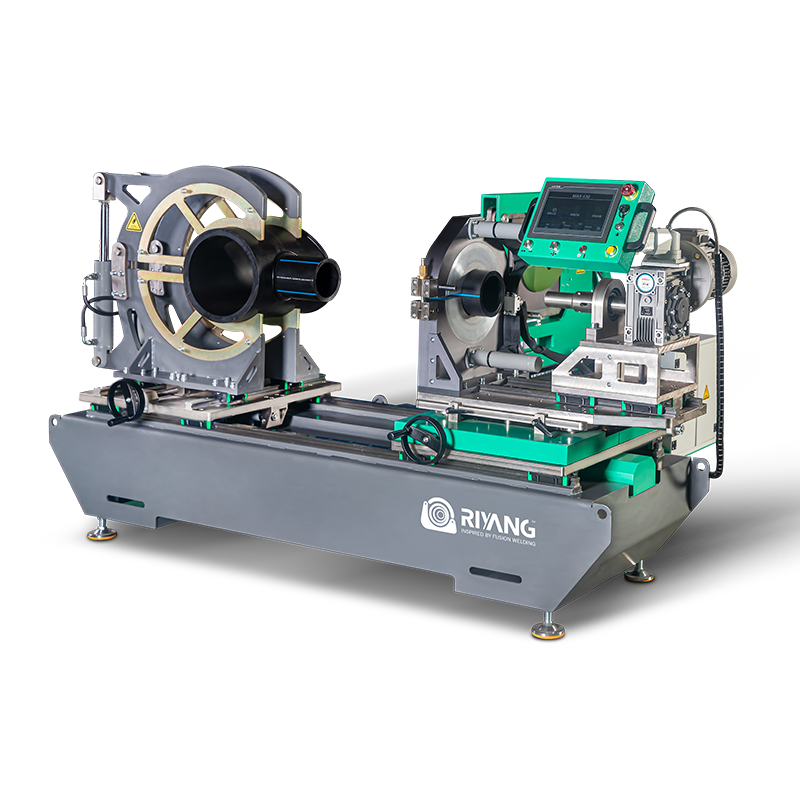
Saddle fusion (also called sidewall fusion) welds a branch fitting onto the outside wall of an HDPE main pipe in the field, while a fabricated reducing tee is built in a workshop from pipe sections and fused into the line as a finished component. Saddle fusion is fast and low-cost for small-to-medium branch connections; fabricated reducing tees support larger branches, tighter tolerances, and repeatable geometry. The right choice depends on branch size, access, service type, and repeatability needs. Saddle fusion is a hot-plate heat fusion process that welds a saddle-shaped fitting onto the side of an existing HDPE pipe. Unlike butt fusion, which joins pipe ends in line, or socket fusion, which joins a spigot into a socket, saddle fusion fuses the fitting base across the pipe wall in a transverse orientation. The terms saddle fusion and sidewall fusion describe the same process. The saddle fitting provides the branch outlet, and the branch pipe is then joined to that outlet by butt fusion, socket fusion, or an integrally molded socket. Common saddle fittings include service saddles, branch saddles, tapping tees, and punch tees. Because the process works on the outside of the pipe, it is often used to add a connection to an already-laid main without cutting the line. A dedicated saddle fusion machine holds the main pipe, applies a heater plate fitted with concave adaptor faces, and brings the saddle and pipe together under controlled force. A fabricated reducing tee is a branch fitting produced in a workshop by cutting and fusing HDPE pipe sections rather than injection molding. Fabrication typically starts with the main pipe body; a branch stub of the required diameter is cut to a saddle profile, or cope, that matches the main pipe outside diameter, then butt fused onto the main pipe at the required angle. Fabrication is performed on a fitting fabrication machine that holds the pipe sections, controls alignment, and applies the heat and fusion force needed for each weld. The result is a custom tee whose run size, branch size, and branch angle can be specified to match the project. Reducing tees connect a smaller branch to a larger main, while equal tees join same-diameter pipes. Because the tee is welded in a controlled environment, dimensions, alignment, and bead quality can be checked before the fitting leaves the shop. The fundamental difference is where the critical weld is made. Saddle fusion is a field process performed on the main pipe in place, in a trench, at a tie-in, or along an existing line. Fabricated reducing tees are welded in a workshop and then transported to the site, where they are joined into the pipeline by butt fusion at both ends. Field saddle fusion minimizes excavation and keeps the main line intact, which is why it is common for service connections and smaller branches. Workshop fabrication shifts the critical welds into a clean, temperature-controlled environment and is preferred when a branch must be precisely positioned, larger than a saddle can reliably support, or repeated many times. Neither method is universally better; they solve different access, size, and quality-control problems. Two machine elements determine saddle fusion quality: the heater faces and the clamping force. Heater faces, also called adaptor plates, must match both the outside diameter of the main pipe and the base geometry of the specific saddle fitting. A face sized for the wrong pipe OD or the wrong saddle radius produces uneven contact, inconsistent melt, and a defective joint. Because saddle fittings vary by manufacturer, size, type, and base contour, heater face selection depends on those details; when they cannot be confirmed, the fitting base should be measured directly before a face is selected. Clamping keeps the main pipe and saddle immobile during heating and fusion. The main pipe is clamped to resist the fusion force, and the saddle is held in the correct position so it cannot creep or tilt as the surfaces melt. Adequate, stable clamping is a basic requirement. Temperature and force values are not universal: PE fusion interface temperatures are commonly in the range of about 200–230 °C, but the correct heater setting, heating time, fusion force, and cooling time must be taken from the fitting and machine manufacturer's documentation for the specific pipe and saddle size, not from general rules of thumb. Saddle fusion is most practical when the branch is smaller than the main pipe. As the branch diameter grows relative to the main, the saddle base becomes large, clamping and alignment become more demanding, and the joint is harder to hold stable during cooling. Fabricated reducing tees extend the practical range: a large branch can be fused onto a main in the shop, where alignment and support are easier to control. For very large branches or full-size equal tees, fabrication is usually the more reliable route. Specific maximum branch-to-main ratios depend on the fitting product line and the machine capacity. The machine's clamping range and available heater face set also set hard boundaries for saddle fusion. If the main pipe OD falls outside the available face set, or the saddle cannot be clamped securely, fabrication is the fallback. These limits should be confirmed with the fitting and machine manufacturer rather than assumed. Both methods depend on clean, oxide-free surfaces. For saddle fusion, the pipe wall and the saddle base are scraped or cleaned to remove the oxidation layer, dirt, and moisture before heating. Contamination at the interface prevents polymer chains from fusing and is a leading cause of weak, leak-prone joints. Field saddle fusion carries higher contamination risk than workshop work: trenches expose the pipe to water, soil, and weather. The fusion area must be dry and protected, and preparation must be done immediately before welding. Workshop fabrication reduces this risk through controlled conditions, but the same discipline applies. The cooling joint must not be moved or stressed until it has fully solidified. The checklist below applies to both methods: When a branch is fabricated onto a main pipe, the branch stub must be cut to match the curvature of the main pipe's outside surface. If the cut radius does not match the main OD, a gap or uneven contact results, and the fusion cannot form a continuous, full-contact bond. Accurate saddle cutting requires either a dedicated machine or careful layout and machining of the branch stub. This is one of the key workshop operations that separates a reliable fabricated tee from a poor fit-up. After cutting, the mating surfaces are cleaned and the branch is butt fused onto the main using controlled heat and force. Saddle fusion is fast and low-cost for one-off or scattered branch connections, because no custom fitting has to be manufactured and shipped. Its cost is mostly field labor and machine time. Fabricated reducing tees carry a higher upfront cost from pipe material, fabrication labor, and shop equipment, but they deliver repeatable geometry across multiple identical fittings and reduce field welding time. Repeatability is the deciding factor in many projects: a fabricated tee made to a jig or a proven procedure reproduces the same dimensions every time, while field saddle fusion depends more on operator skill and site conditions. When a project needs many branches of the same size and angle, workshop fabrication can be more economical overall and gives a more consistent product. Need consistent branch geometry? Compare RIYANG fitting fabrication machines against field saddle fusion before you commit to a method. Service connections onto a live or existing main often favor saddle fusion for small service branches, where field speed and minimal excavation matter. Fabricated tees are used for larger or repeated branch tie-ins. Both methods are common. Saddle fusion suits service saddles and small branch taps; fabricated reducing tees suit larger-diameter branches and manifold arrangements. Where a branch must be a non-standard angle, a special size, or precisely located, workshop fabrication is the natural choice. The governing utility specification, national code, and the fitting manufacturer's published limits determine which method is permitted for a given service. Do not substitute one for the other without confirming acceptability. They are the same hot-plate process; sidewall is simply another name for saddle fusion, referring to fusing a fitting onto the side wall of the pipe. It is best suited to branches smaller than the main pipe. As the branch grows relative to the main, a fabricated reducing tee becomes the more reliable choice. The adaptor face must match both the main pipe OD and the saddle base radius. A mismatch causes uneven melt and a weak, inconsistent joint. Both methods form fused, homogeneous polyethylene joints. Joint quality depends on surface preparation, alignment, and correct fusion parameters rather than on the method itself. Evaluate the branch-to-main size ratio, field access, contamination control, the number of identical branches required, and the governing specification before deciding. To evaluate saddle fusion equipment for field branch connections, review the Riyang saddle fusion machine line.What Is Saddle (Sidewall) Fusion?
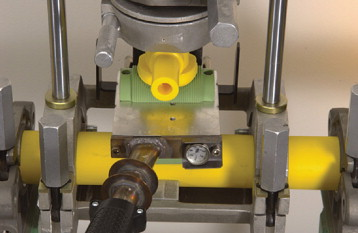
What Is a Fabricated Reducing Tee?
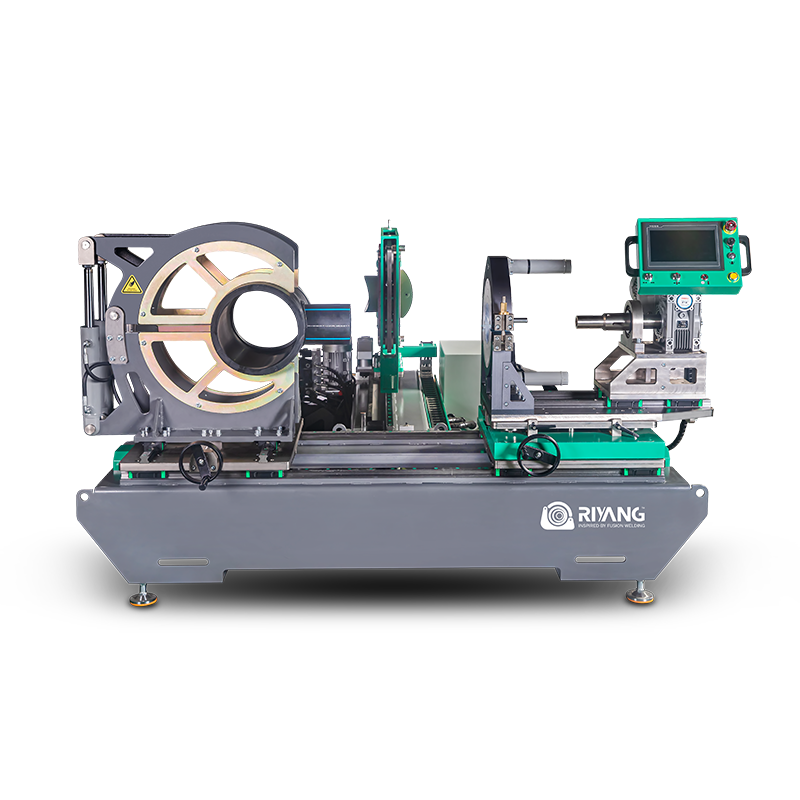
Field Branch Connection vs Workshop Fabrication
Heater Faces and Clamping Force for Saddle Fusion
Main-Pipe and Branch-Pipe Size Limits
Surface Preparation and Contamination Risk
Saddle Radius Cutting for Fabricated Branches
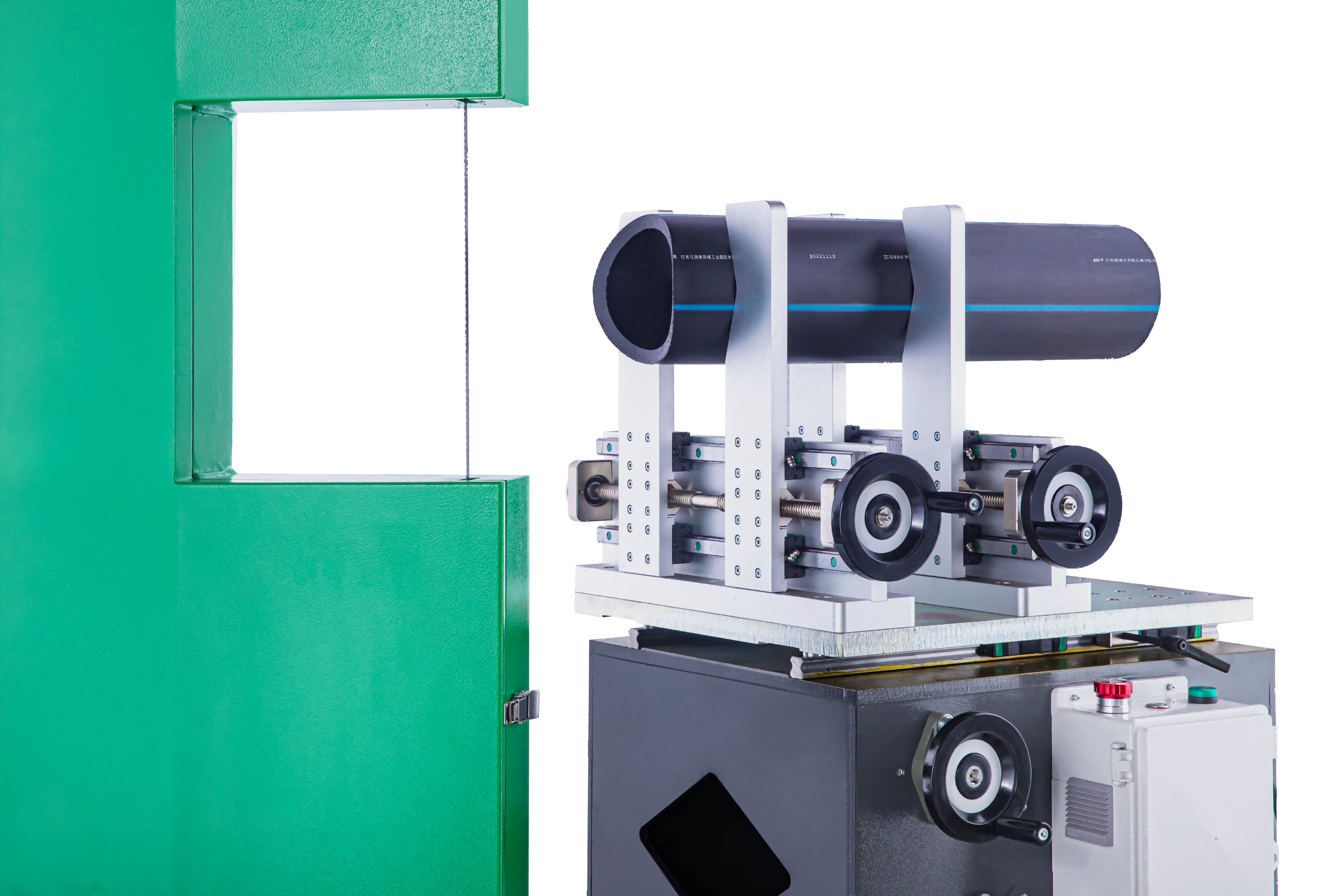
Production Flexibility, Cost, and Repeatability
Best Fit by Service Type
Gas distribution
Water networks
Custom fittings
Decision Table
Factor Saddle (Sidewall) Fusion Fabricated Reducing Tee Where welded Field, on the main pipe Workshop, then shipped Branch size Smaller than main, moderate ratios Larger branches and equal tees Contamination risk Higher, trench and weather Lower, controlled shop Repeatability Operator-dependent High, jig or proven procedure Upfront cost Lower Higher, material plus labor Field time More field welding Less field welding Custom angles and sizes Limited by fitting catalog Flexible Frequently Asked Questions
What is the difference between saddle fusion and sidewall fusion?
Can saddle fusion be used for large branch connections?
Why does heater face selection matter so much?
Is a fabricated reducing tee stronger than a saddle fusion joint?
How do I choose between the two methods?
Key Takeaways
References